Why they are illustrations and not photographs
Every IZENA design is a drawing, not a photograph. We draw the place so that it can be recognised at a glance: on a t-shirt, from a distance and in movement.
That's why we simplify. We keep what makes each place unique and leave the rest out. A thick-line illustration can't copy every crossbeam of a crane or the geology of a rock. It can do something else: make someone look at it and know exactly where it is.
Every t-shirt carries the real coordinates of the place and a QR code on the back. The drawing reminds you. The map takes you there.
Scan the QR on any design and you'll land on the exact spot.
Bilbao — The Carola Crane

On the bank of the Nervión, where steel and water meet, the Carola Crane has spent decades as a silent witness to Bilbao's transformation. It isn't just a crane: it's a symbol of a city that knew how to reinvent itself without forgetting where it came from.
Its industrial silhouette, imposing and elegant at once, inspired a design that captures the essence of Bilbao: strength, history and local pride turned into portable art.

Bilbao — Aste Nagusia
Nine days in August when Bilbao stops being a city and turns into something else. The txupinazo rocket from the Arriaga balcony, Marijaia with her arms in the air, the txosna bars along the estuary and a comparsa waiting for you on every corner. Forget the programme: the programme is the street.
The shared euphoria of those nine days, the kalimotxo in a plastic cup and the certainty that during Aste Nagusia everybody is from Bilbao inspired a design that celebrates the fiesta as identity.

Getxo — The Old Port

The Old Port of Algorta is one of those corners time seems to have forgotten on purpose. Coloured houses, wooden boats and the smell of salt and history. A place where life moves slowly and every stone has something to tell.
The port's palette, its seafaring architecture and its intimate character inspired a design that celebrates the local, the authentic and what deserves to be remembered.

Getxo — Aixerrota

An 18th-century windmill planted on top of the cliff. They built it because droughts kept drying out the watermills on the estuary, and up here the wind never has an off season. Aixerrota means exactly that: windmill.
The stone silhouette cut against the open sky, and the stubbornness of building where the wind never lets up, shaped a design about holding your ground in the difficult spot.

Portugalete — The Bizkaia Bridge

The world's first transporter bridge, standing since 1893 and a UNESCO World Heritage Site. It crosses the estuary hanging from a cable in a minute and a half, and it has been doing exactly that for over a century. It isn't a monument you look at from outside: it's a bridge people use every day to get to work.
The riveted iron, the 19th-century engineering and that mix of usefulness and beauty so typical of the left bank inspired a design about the things that are built to last.

Sopelana — El Peñón

A mass of rock driven into the sand, splitting Arrietara beach in two. And all around it, in the Sopelana cliffs, one of the strangest things you can put your hand on: the exact line where the dinosaurs ended, drawn into the stone.
The contrast between rock, sand and water, and the idea of a place where the history of the Earth can be read with the naked eye, shaped a clean, emphatic design.

Gaztelugatxe

An islet of living rock joined to the coast by a stone bridge and 241 steps. Gaztelugatxe isn't a place you visit: it's a place you conquer. The wind, the sea and the hermitage of San Juan have been calling those who want more than a landscape for centuries.
The tension between the climb and the summit, between effort and reward, shaped a design about perseverance and the wild beauty of the Basque Country.

Mundaka — The Left-Hand Wave

Mundaka is home to the longest left-hand wave in Europe. Surfers from all over the world travel to this small village in the Urdaibai Biosphere Reserve to ride a wave that can run for more than 400 metres. A natural phenomenon that turned Mundaka into a legend.
The flow, the power and the freedom of that perfect wave inspired a design about movement, nature and the connection between people and the sea.

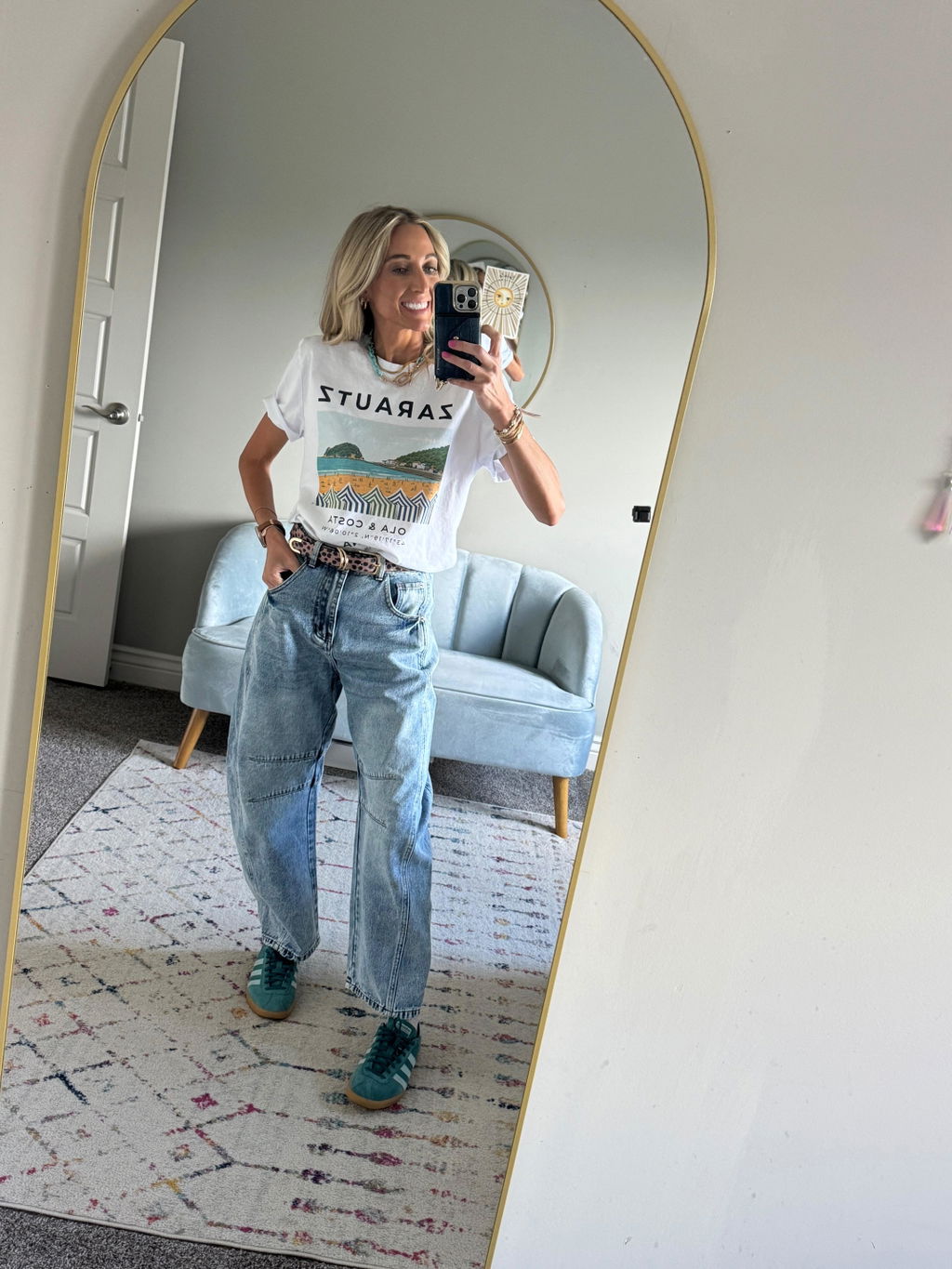
Zarautz — Wave & Coast

The longest beach in Gipuzkoa: two and a half kilometres of sand facing straight out to the Cantabrian Sea. Zarautz is where a lot of people around here stood on a board for the first time, and where surfing stopped being something foreign and became something of our own.
The long line of the coast, the steady rhythm of the waves and the feel of a surf town inspired a design of open horizon.

San Sebastián — La Concha

La Concha bay is considered one of the most beautiful in the world, and anyone who knows it understands why. The seafront promenade, Santa Clara island in the distance and the golden light of late afternoon create a picture that stays with you.
The perfect curve of the bay, its natural elegance and its unique light inspired a design that captures the effortless sophistication of Donostia.

Vitoria-Gasteiz — Virgen Blanca

Virgen Blanca square is the heart of Vitoria-Gasteiz. Every 4 August, the Celedones rocket marks the start of the festival and the square erupts in joy, colour and tradition. But even on quiet days, there is something about that space that makes you want to stay.
The festive energy, the historic architecture and the community spirit of the square inspired a design that celebrates Alava's identity with pride and elegance.